
Expert urges Russia, India, China partnership to renew Africa’s infrastructure
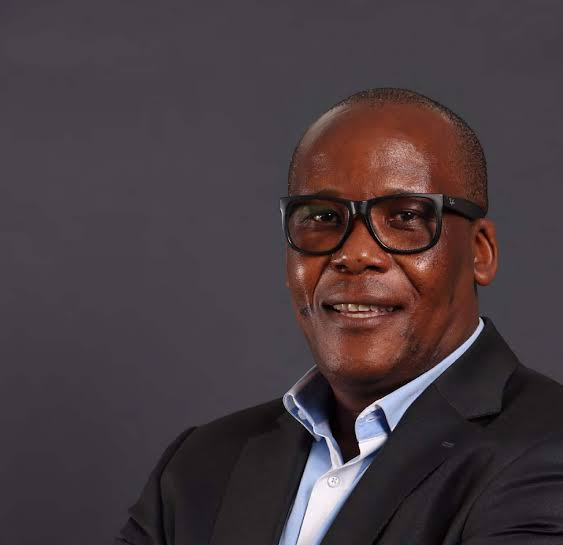
South African business leader Elias Monage, chairman of the South African side of the Russia–South Africa Business Council and president of the Black Business Council, has called for Russia, India and China to play a larger role in renewing Africa’s infrastructure.
He made the comments on September 25, 2026, during a TV BRICS programme monitored by Nigeria’s News Agency of Nigeria.
Monage’s argument is essentially that Africa could use the complementary capabilities of the three major BRICS economies rather than relying on a single external partner.
What he proposed
His comments focused particularly on transport and logistics infrastructure. He identified South Africa as a potential southern African logistics hub because of its geographic position and existing infrastructure, with the objective of improving the movement of goods into neighbouring African markets.
He also pointed to several practical areas where cooperation is already being discussed:
-
Truck manufacturing: A South African–Russian delegation visited Mozambique to explore establishing a truck assembly plant.
-
Vehicle production: Discussions are underway around an assembly facility involving a Russian vehicle manufacturer and a South African state-owned enterprise, potentially using Russian chassis.
-
Trade logistics: Monage highlighted the need for better transport connections and regulatory coordination across BRICS and African markets.
-
Skills and technology: He stressed education, professional training and skills transfer as part of infrastructure cooperation.
-
Agricultural trade: South Africa is reviewing arrangements for importing Russian poultry and distributing it to other African markets.
Read Also:
-
Chinese Ambassador Commends Tinubu’s Reforms, Says Nigeria-China Trade Hits $18bn
-
Nigeria’s N500,000 wage demand exposes why pay raises keep losing value
-
Naira may depreciate due to CBN’s interest rate cut, says Rewane
Why India and China matter
Although the immediate examples cited by Monage were predominantly South African–Russian initiatives, his broader proposal places Russia alongside India and China as potential infrastructure and industrial partners.
China already has extensive experience financing and constructing African infrastructure, including roads, railways, ports, power facilities and telecommunications infrastructure. India’s engagement has increasingly involved pharmaceuticals, digital services, manufacturing, energy and infrastructure. Russia’s role has traditionally been more concentrated in areas such as energy, mining, nuclear technology, defence and agricultural inputs.
The potential attraction of combining these capabilities would be industrial rather than purely financial: infrastructure projects could potentially be linked to manufacturing, technology transfer, skills development and regional trade.
The BRICS angle
The proposal comes at an interesting moment because BRICS itself has expanded substantially. The original five members—Brazil, Russia, India, China and South Africa—have been joined by countries including Egypt, Ethiopia, Iran, Indonesia and the UAE.
Reuters reported that at the 2026 BRICS summit in New Delhi, Chinese President Xi Jinping promoted initiatives intended to make the expanded grouping more practical in areas such as trade, technology, finance and special economic zones.
That creates a potential institutional framework for the kind of cooperation Monage is describing, although there is not currently a single Russia–India–China infrastructure programme for Africa equivalent to a unified development bank or continent-wide construction initiative. The proposal is better understood as a call for greater coordination among existing national and BRICS-linked initiatives.
Africa’s infrastructure gap
The BRICS angle, Africa still has major deficits in: electricity generation and transmission, railways, roads and bridges, ports and logistics, water and sanitation, telecommunications, industrial infrastructure, and regional transport connections.
The African Continental Free Trade Area makes transport infrastructure particularly important because lowering tariffs has limited economic impact if goods remain expensive or slow to move between African countries.
Recent analysis highlighted that Africa uses only a fraction of its available renewable-energy potential—for example, about 1% of its solar potential, 7% of wind potential and 11% of hydropower potential, according to figures cited from the Africa Finance Corporation’s State of Africa’s Infrastructure Report 2024.
The major question: financing
The difficult issue is not simply whether Russia, India and China possess the technology and companies to build infrastructure. It is how projects would be financed and under what commercial terms.
China’s lending to Africa has declined considerably from its peak, while African governments face high debt-servicing costs and constrained fiscal space. Multilateral institutions including the African Development Bank, World Bank and BRICS’ New Development Bank, have consequently become increasingly important sources of infrastructure finance.
The key issue for African countries would be ensuring that projects produce local economic value, technology transfer, employment and sustainable debt obligations, rather than simply importing foreign contractors and equipment.
What Monage’s proposal represents
Monage’s comments are therefore less a proposal for a new political bloc than a call for greater practical economic coordination among Russia, India, China and African countries.
It fits into a broader 2026 trend toward African governments diversifying their economic partnerships. At the same time, African countries are increasingly emphasizing that they want infrastructure partnerships tied to industrialization and regional integration rather than infrastructure construction in isolation.
The immediate examples cited by Monage; Russian vehicle assembly, South African logistics, agricultural trade and skills cooperation—illustrate what such a model could look like in practice.

1 thought on “Expert urges Russia, India, China partnership to renew Africa’s infrastructure”