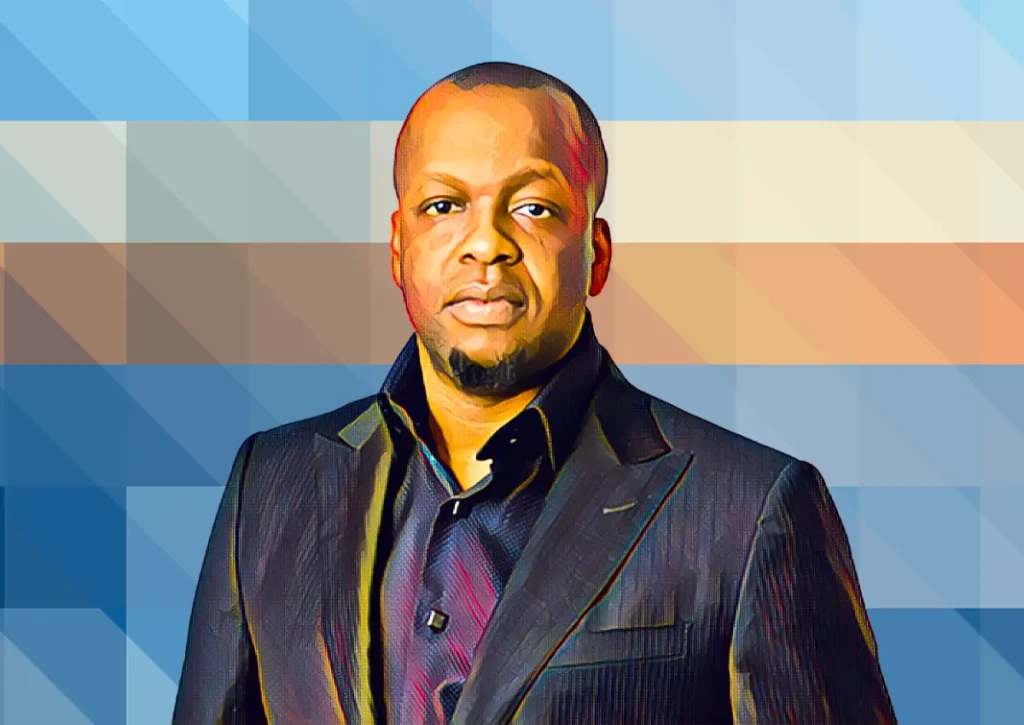
Igho Sanomi: Building Influence Beyond Business
LeadWay Senior Editor
In the world of African business, where ambition often collides with uncertainty, few journeys are as layered as that of Igho Sanomi. Entrepreneur, investor and philanthropist, Sanomi has spent decades navigating the intersection of capital, commodities and global commerce, building businesses while steadily expanding his influence beyond the traditional boundaries of the corporate world.
His rise is closely associated with Taleveras, the commodities trading company he founded and developed into an international business. At a time when Africa’s private sector was still fighting for greater visibility on the global stage, Sanomi pursued an ambitious proposition: that an African-founded enterprise could compete in some of the world’s most sophisticated and fiercely contested markets.
That duality, commercial ambition on one hand and social responsibility on the other—provides a compelling lens through which to understand Sanomi. His career raises a larger question about the evolving role of African wealth: whether success should be measured only by the size of a business empire, or also by the enduring impact that an entrepreneur leaves on society.
For Sanomi, the answer appears to lie somewhere between the two. His journey is ultimately a story of enterprise, influence and reinvention—and of an African entrepreneur who has sought not merely to participate in the global economy, but to leave his mark on it.
The Entrepreneur Beyond the Boardroom
For Igho Sanomi, success has never been defined solely by balance sheets, boardrooms, or business deals. Over the course of a remarkable career, the Nigerian entrepreneur and investor has built a reputation that extends from the international commodities market to philanthropy and social impact.
His entrepreneurial journey reflects the ambition of a generation of African business leaders determined to compete on the world stage while creating opportunities at home.
Yet, beyond the world of commerce lies another dimension to Sanomi’s story. Through philanthropy and humanitarian initiatives, he has sought to direct his resources and influence toward education, healthcare, poverty alleviation, and support for vulnerable communities. For him, the measure of achievement appears to extend beyond what can be accumulated to what can be shared and sustained.
His story is therefore not simply one of wealth or entrepreneurship. It is a story about ambition, risk, reinvention, and the pursuit of impact and about a Nigerian businessman whose career has unfolded at the intersection of African enterprise and the global economy.
Who is Igho Sanomi?
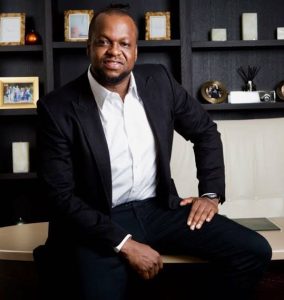
He was born on May 17, 1975, from Agbor, Delta State. He studied geology and mining at the University of Jos.
His entry into energy trading came in the late 1990s, when he became involved in petroleum trading and subsequently worked with/alongside companies including Cosmos Oil AG and Masefield, a Swiss energy-trading business.
According to a 2017 Forbes profile, Sanomi began by helping Nigerian businessmen who had won petroleum-import contracts to execute those contracts through international trading partners.
His early relationship with Masefield was particularly important because it exposed him to: commodity financing, shipping, hedging, refinery relationships, international banking, physical oil logistics, and the mechanics of taking and managing commodity positions.
Sanomi subsequently established Sarian Oil, before consolidating his activities under Taleveras in 2004.
The trajectory is significant: he did not initially build his business by owning large producing oil fields. He built it through trading and intermediation, using access to finance, suppliers, buyers and logistics to move physical petroleum.
Taleveras: the centre of Sanomi’s business network
Taleveras is the central company associated with Sanomi. Taleveras describes itself today as a global energy and services company operating in the midstream, downstream and power sectors, with expansion into LNG and renewable energy.
Historically, however, the group’s activities were considerably broader. They included: crude-oil trading. refined petroleum products, natural gas, oil lifting, upstream oil interests, power generation, power transmission, construction, infrastructure, energy logistics and international commodity trading.
A 2017 Forbes profile reported that Taleveras had at its peak moved more than 170 million barrels of crude and petroleum products annually and had operations spanning Africa, Europe and Asia.
This trading model is important for understanding Sanomi’s connections. A commodity trader can have extensive relationships with governments, national oil companies, banks, shipping companies, refineries and other commodity traders without owning the underlying resource.
The Masefield connection
One of Sanomi’s earliest significant commercial relationships was with Masefield AG, a Swiss energy-trading company.
According to Sanomi’s account to Forbes, he initially brought Nigerian petroleum contracts to Masefield and worked with the company on fulfilling them. Masefield provided much of the financial, shipping and technical infrastructure required to execute the transactions.
This relationship appears to have been formative because it gave Sanomi exposure to the international commodity-trading system.
It also illustrates an important feature of his later business strategy:
Nigerian commercial opportunity + international financing/logistics + international off-taker = scalable energy-trading business.
After the relationship with Masefield, Sanomi declined an offer to join the company and instead established his own trading operation.
Sarian Oil and the transition to Taleveras
Sanomi’s first independent vehicle was Sarian Oil and Services.
The early business model was relatively conservative. Banks would finance transactions where there was already a known buyer or “off-taker.” Once Sanomi demonstrated that he could execute transactions reliably, financing became more flexible.
That allowed the business to progress from simple back-to-back transactions toward taking positions in physical commodities.
This is an important step in understanding how the business became large: access to working capital and banking relationships was almost as important as access to crude itself.
Sanomi subsequently consolidated his activities under Taleveras in 2004. Forbes reports that Taleveras later became a major supplier of fuel-oil feedstock to U.S. refiners and entered into a joint venture with Morgan Stanley’s trading arm concerning crude supply to a refinery.
Morgan Stanley and international commodity finance
One of the more important international connections reported in relation to Sanomi is Morgan Stanley’s commodity-trading operation.
Sanomi told Forbes that Taleveras had an exclusive joint venture with Morgan Stanley’s trading arm for crude supply to one of its refineries.
Separately, research by the Natural Resource Governance Institute found that Morgan Stanley received most of Taleveras’s crude swap cargoes in 2011.
This is significant because it demonstrates that Taleveras was not simply selling Nigerian crude to small local businesses. It was plugged into the international commodity-trading ecosystem.
The network therefore included major international financial and trading institutions.
NNPC and Duke Oil
A particularly important part of Sanomi’s Nigerian business network was his relationship with Duke Oil, an international trading company associated with the Nigerian National Petroleum Corporation (NNPC).
Taleveras Petroleum Trading BV entered into a Management and Operation Agreement with Duke Oil in 2011 concerning Duke’s crude-for-products exchange arrangement with NNPC/PPMC. BusinessDay reported that the agreement ran from February 2011 through December 2014. Importantly, Taleveras stated that it did not have a direct contract with NNPC/PPMC for that arrangement; its contractual relationship was with Duke Oil.
Research by the Natural Resource Governance Institute similarly described Taleveras, Aiteo and Ontario as the three Nigerian trading companies managing portions of the Duke/PPMC arrangement.
The arrangement gave Taleveras access to significant volumes of Nigerian crude while requiring it to participate in the supply of refined petroleum products.
NNPC crude-lifting relationships
Taleveras also became a participant in Nigeria’s crude-oil lifting system.
NRGI reported that Taleveras began lifting Nigerian crude in 2008, while its share of the Nigerian crude and products markets expanded during the following years.
This is a critical connection because NNPC crude-lifting allocations historically provided Nigerian indigenous traders with access to substantial physical volumes.
Sanomi has argued that Taleveras qualified for the relevant contracts based on its track record and balance sheet, rather than receiving them improperly. Forbes reported his position that the company had already developed a substantial international trading business before the Goodluck Jonathan administration.
Afam Power
Sanomi’s network subsequently moved beyond trading into electricity generation.
In 2013, Taleveras acquired 100% of Afam Power Plc, according to Afam Power’s audited financial statements filed with Nigerian electricity-sector authorities. The transaction was part of the Federal Government’s power-sector reform programme. This was considerably more than a commodity-trading relationship.
It positioned Sanomi’s group within Nigeria’s emerging private electricity-generation sector.
Taleveras subsequently entered into a technical agreement with Alstom for rehabilitation and expansion of the Afam plant. Contemporary reporting described the project as involving the 776MW Afam facility.
Another major connection was with Aiteo, the Nigerian energy company associated with businessman Benedict Peters.
In 2014, an Aiteo-led consortium acquired a 45% interest in OML 29, one of Shell’s major Nigerian oil assets.
Sanomi’s international network also includes relationships with some of the world’s largest commodity traders such as Vitol and Glencore. His businesses have also intersected with the international oil majors such as Shell, Total and Eni.
A concise relationship map
IGHO SANOMI
│
▼
TALEVERAS GROUP
│
┌─────────────────────┼───────